Volume LXXIV · Maison Argile
The patient art of making, written in clay and kept in the family.
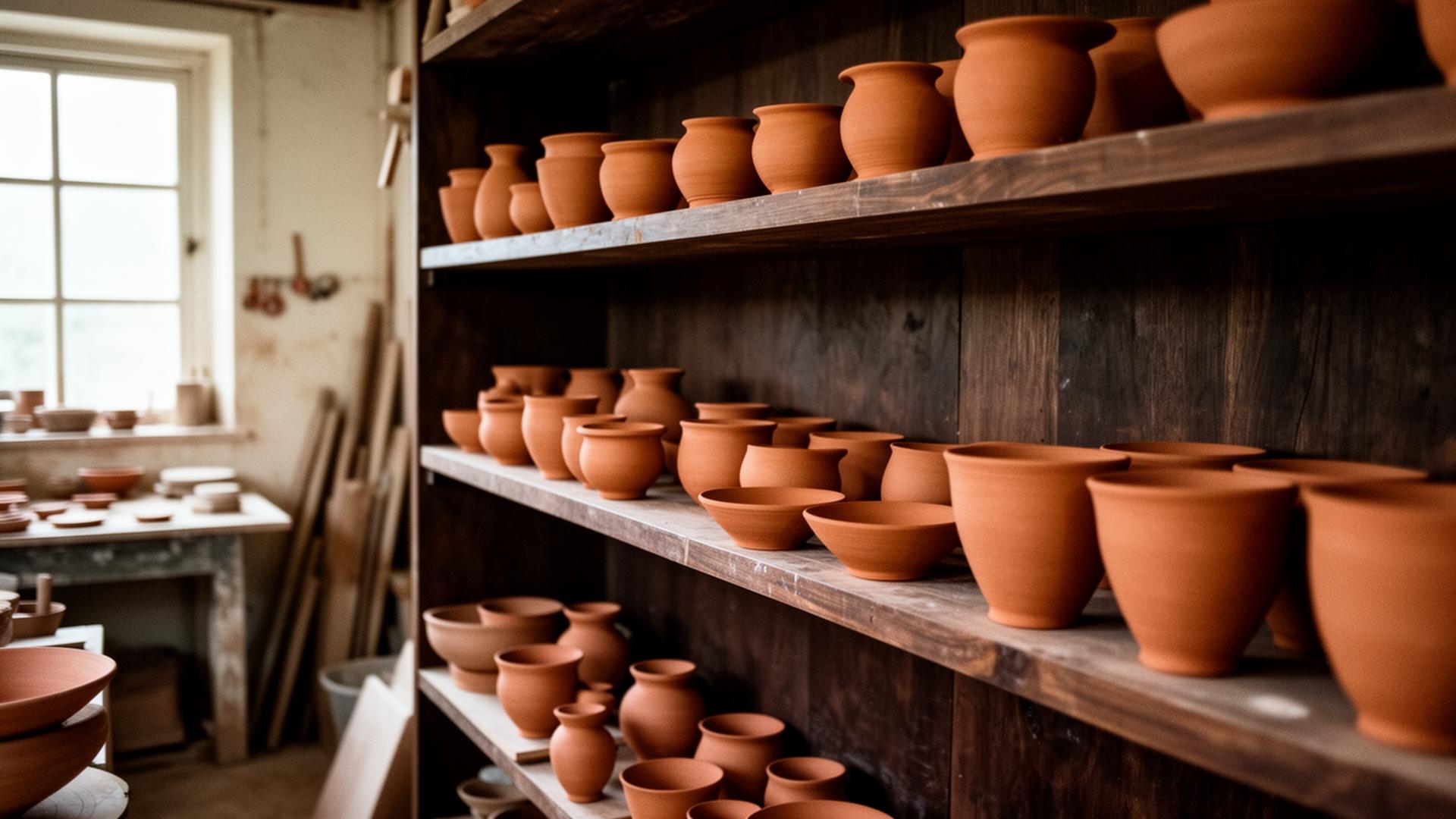
For three generations, a single atelier in the old mill outside Albi has turned terracotta into objects of daily reverence — slowly, by hand, with the same nine pairs of hands a season.
Chapter One
About us &
our history.
Three generations. Seventy-four years. One mill on the river Tarn.
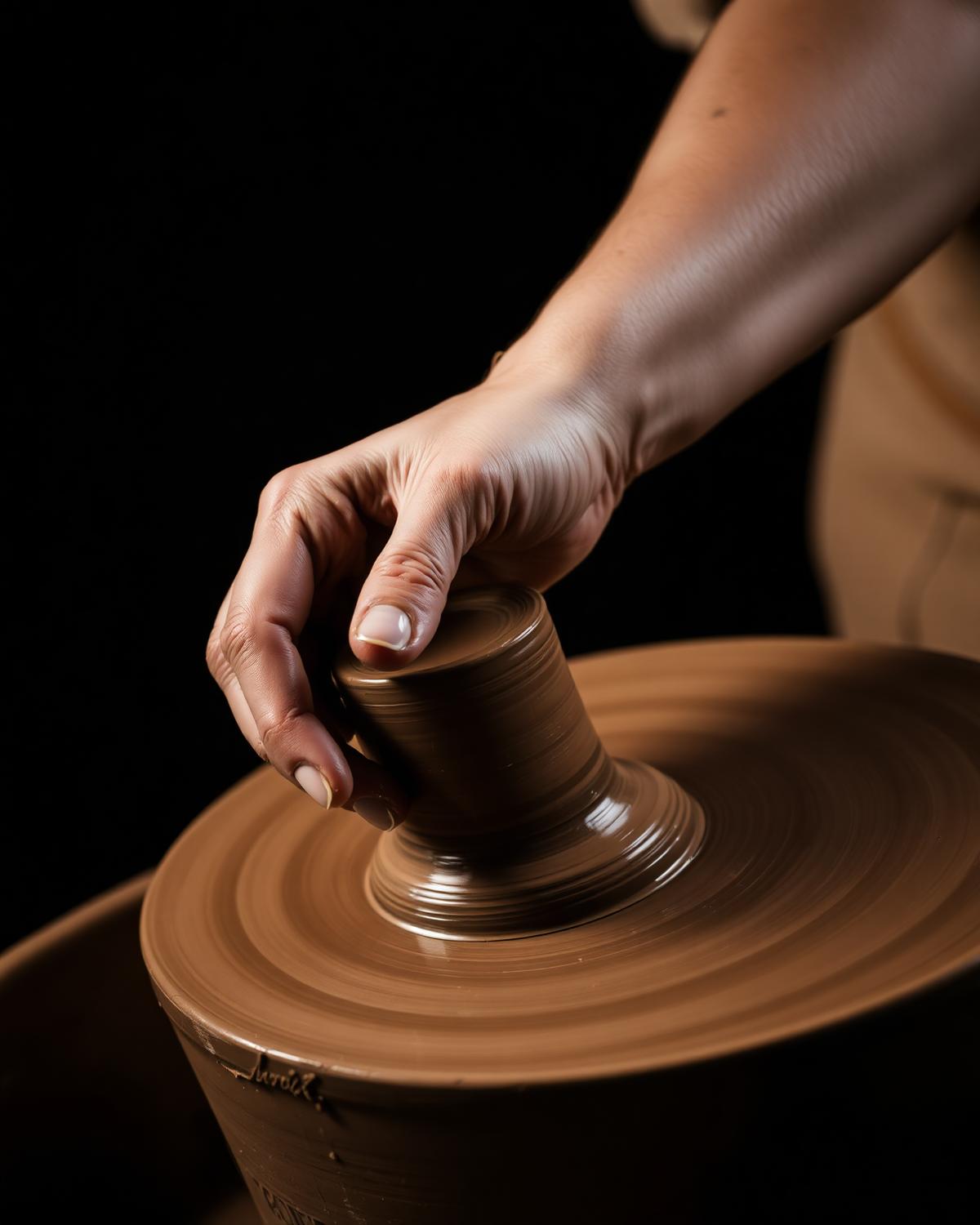
Maison Argile was founded in the spring of 1952 by Henri and Margot Argile, in a single rented room on Rue des Tanneurs. The first kiln was borrowed from the village schoolmaster, and the first sixty plates were finished — so the story goes — by the light of two oil lamps and one extraordinary act of faith. Margot kept the books in a leather ledger that is still on the shelf above the office door. Henri kept the wheel. In the seventy-four years since, very little has changed in the shape of the day: the clay is mixed at dawn, the wheel turns until noon, the kiln is loaded before supper, and the work — whatever it may be — is signed by the hand that made it. We do not romanticise this. It is simply the only way we know how to work.

A Brief Chronology
- 1952Vol. 1
A small storefront on Rue des Tanneurs
Henri & Margot Argile open a single-room workshop with a kiln borrowed from the village school. Their first commission — sixty service plates — is finished by candlelight.
- 1968Vol. 2
The atelier moves to the old mill
Their son Pierre converts a 19th-century flour mill into the studio that still stands today. The water wheel is kept; it now turns the clay-mixer.
- 1989Vol. 3
First international editorial
A six-page feature in Domus draws the eye of curators in Milan and Kyoto. The waiting list grows to eighteen months.
- 2004Vol. 4
The Archive opens to the public
Three thousand drawings, glaze tests, and letters are catalogued and made available, free, to students and scholars.
- 2019Vol. 5
Third generation, same hands
Camille Argile takes over the atelier with a quiet promise: no automation of the wheel, no shortcuts in the firing.
- 2026Vol. 6
Seventy-four years on
Still nine artisans. Still one kiln. Still, every piece signed by the hand that turned it.
Chapter Two
Six values, written in clay.
Not slogans. Not posters in the workshop. These are the working rules we agreed on in 1968, and have not yet found reason to revise.
- I.
Patience
We refuse the deadline that forces a shortcut. A piece is finished when the clay says so — not when the calendar does.
- II.
Provenance
Every vessel carries a card: the maker's name, the clay's origin, the kiln's date. Anonymity is a modern convenience we decline.
- III.
Repair
We will mend, refire, and re-glaze any piece we have ever made, for as long as the atelier stands. A purchase is the beginning of a relationship.
- IV.
Restraint
We make fewer things than we are asked to. The waiting list is not a marketing tool — it is the honest pace of the wheel.
- V.
Stewardship
The mill, the kiln, the clay seams in the valley behind us — these were lent to us. We return them in better condition than we found them.
- VI.
Quiet
We do not shout. We do not advertise. The work, displayed honestly, is invited to speak for itself.
Chapter Three
The atelier, today.
- Artisans
- 9
- Kilns
- 1
- Pieces / year
- ~1,400
- Waiting list
- 14 mo.
A Letter from the Director
“We were given a mill, a kiln, and a name. We owe it to the next generation to hand them back, intact — and, if we are honest with our work, a little more luminous than we received them.”
— Camille Argile, Director